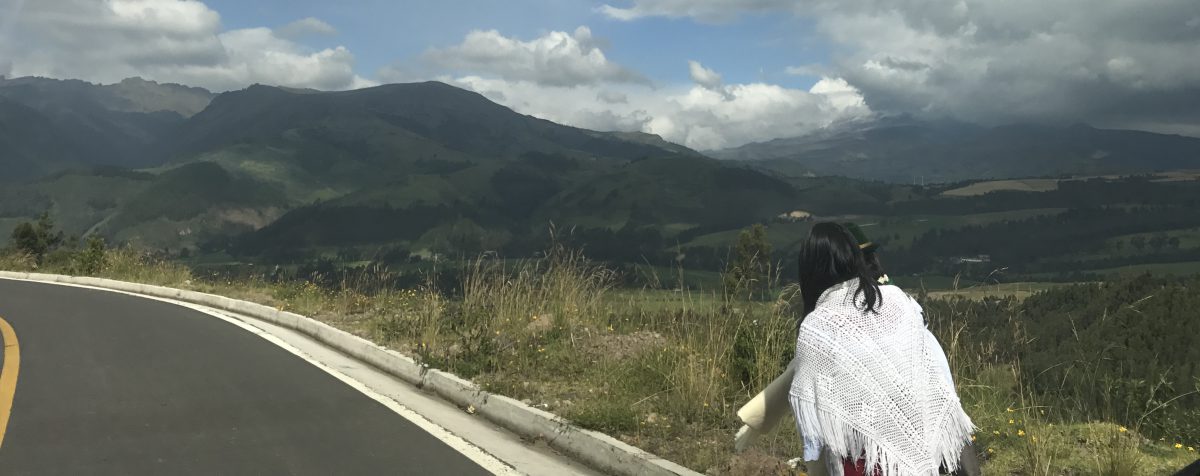

We arrived at the cultural center for our first day of Kichwa lessons, but before getting started, Renee gave us a tour of the site, which is also the historic location of a textile factory (Vieja Fábrica de Cobijas) that has been transformed into a living museum (el Museo Viviente Otavalango). Renee has a deep connection to this place not only because of his native Kichwa roots, but also because he worked in the factory as a 14 year old. He shared his experiences with us and gave us more insight into the oppression of the indigenous people in this region.
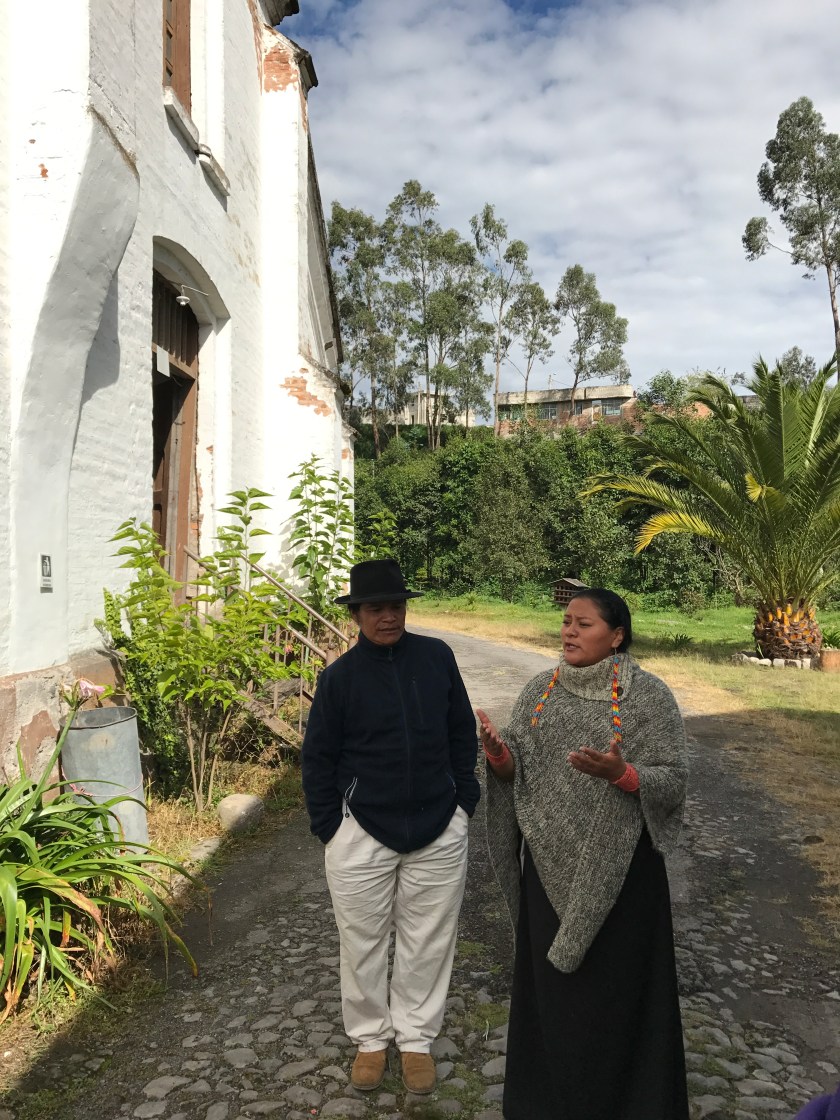
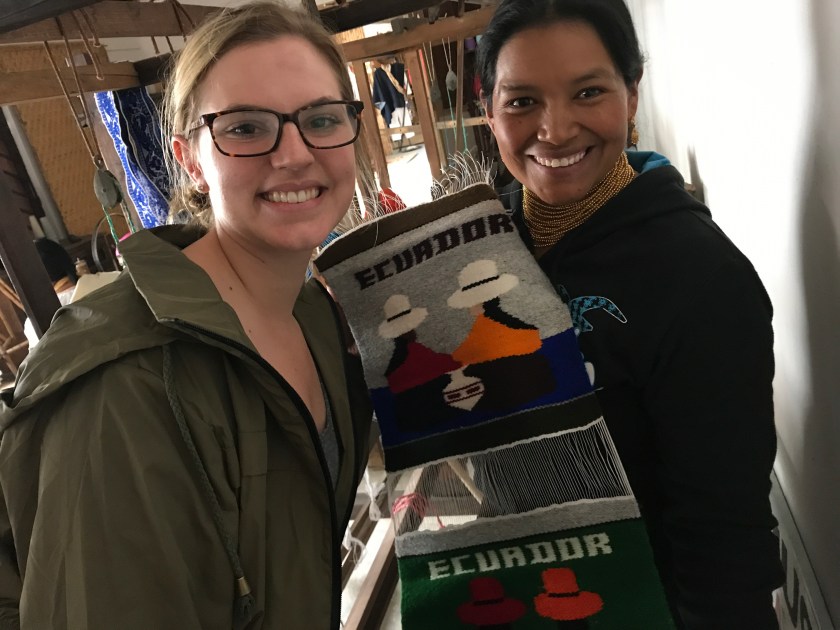
This Cultural center strives to protect, recuperate, and maintain Kichwa heritage and practices through dance, music and language lessons, in addition to hosting important cultural events. During our tour, we were exposed to many Kichwa materials and cultural practices, artesan work such as weaving and embroidery.
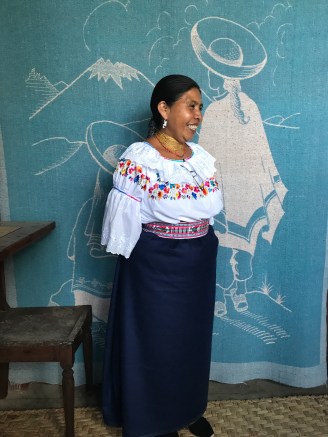


I wanted to clarify that the language barrier for me on this study program is steep. Although Kichwa is the language focus in order to identify with the culture of the region, the language that is spoken for our sessions and informational tours is Spanish. My Spanish is basic (at best), which helps me understand some words and phrases here and there, but the meaning of the context is vague. For example, I may understand a few words in a sentence, like importante (important) and dice que (says that), but often I’m unable to understand the full context.
All this to say, I am finding myself each day using coping mechanisms to try to gain as much understanding as possible (panicking is included in one of these coping mechanisms. Also, tears). After nearly an entire day of receiving instruction in Spanish, we pressed on to yet another situation where I found myself relying on my colleagues to translate. Our language teacher, Mama Luzmila was giving us a tour of the living museum, and I started thinking about my English Language Learners. I wondered if this was how they felt in situations like this – when they are receiving instruction in a language that is unfamiliar to them. After discovering that panicking wouldn’t accomplish anything, my mind was scrounging for meaning. I had been in the living museum for a few minutes reading my friend’s translated-to-English-notes when I decided to try and interpret the experience without direct translation. I still couldn’t understand what Mama Luzmila was saying, but she was using realia (objects from real life used in classroom instruction by educators to improve students’ understanding of other cultures and real life situations).

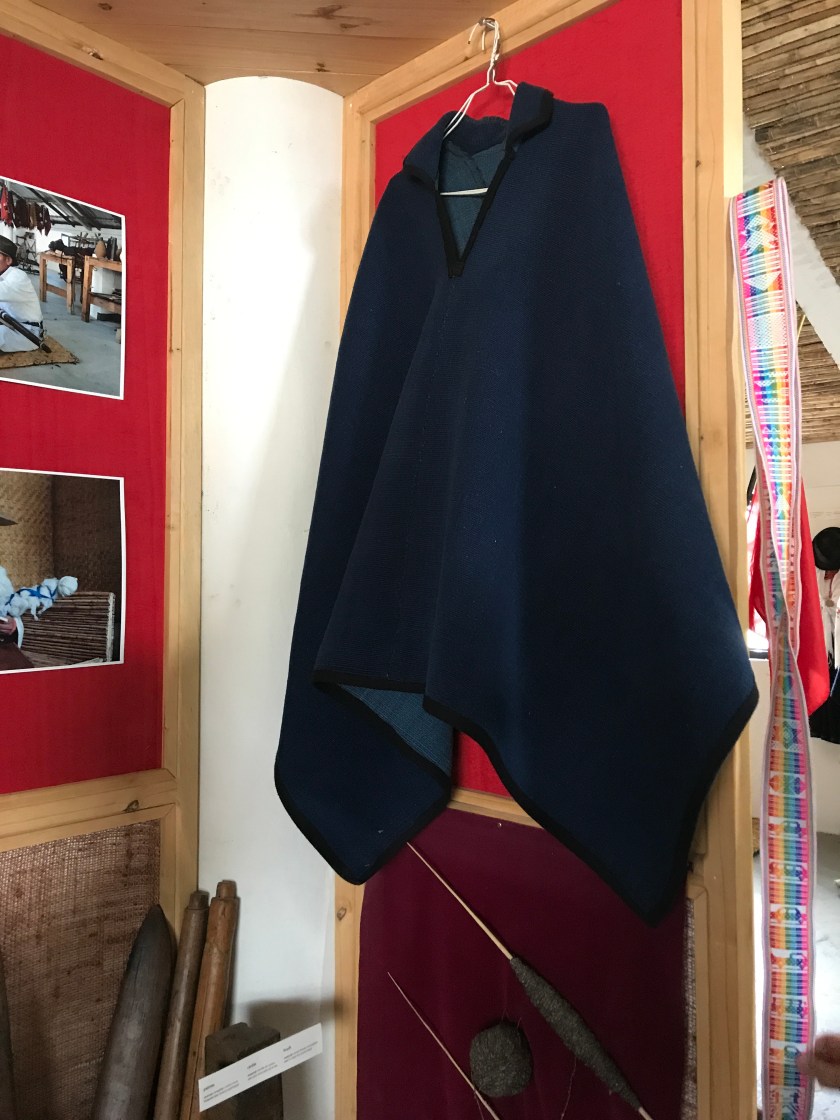
I discovered that not only was she standing in the midst of artifacts, Kichwa materials, and traditional Andean clothing, but also, there were charts labeling everything. How many times have I learned that our English Language Learners need realia, images, and vocabulary word walls to find meaning? For the first time, I identified as a student in a classroom setting who needed these supports.



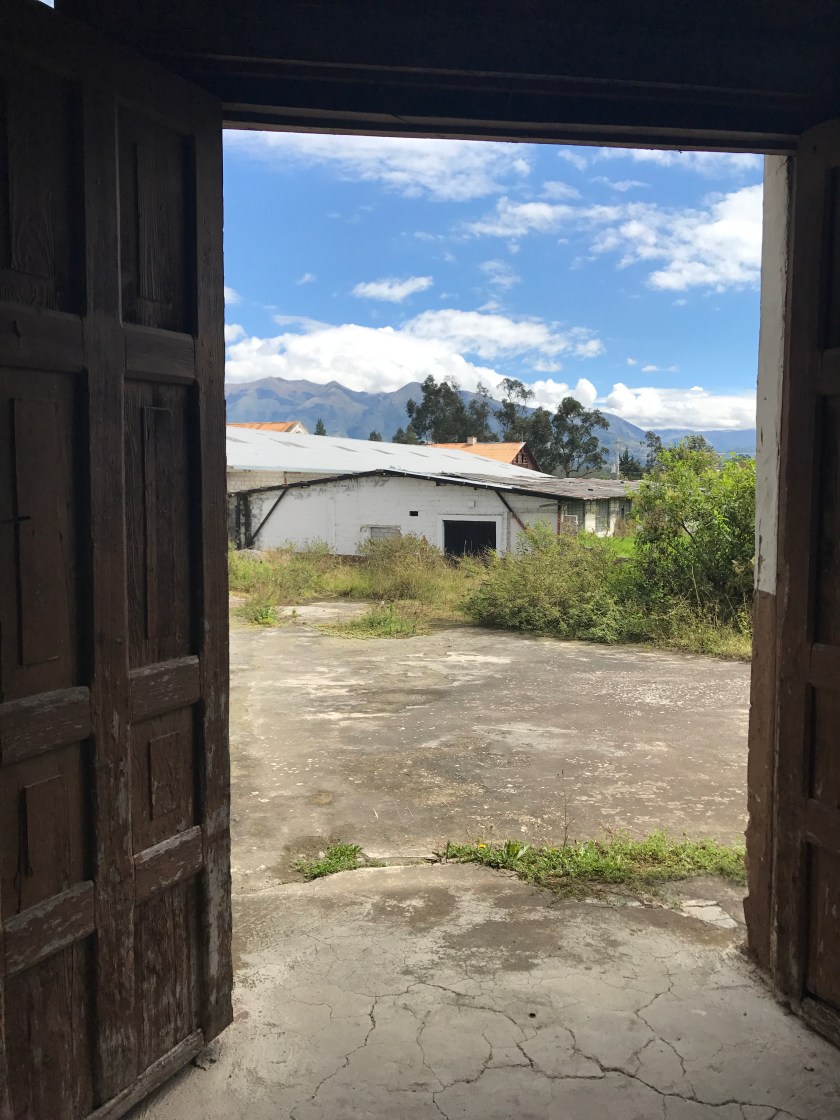
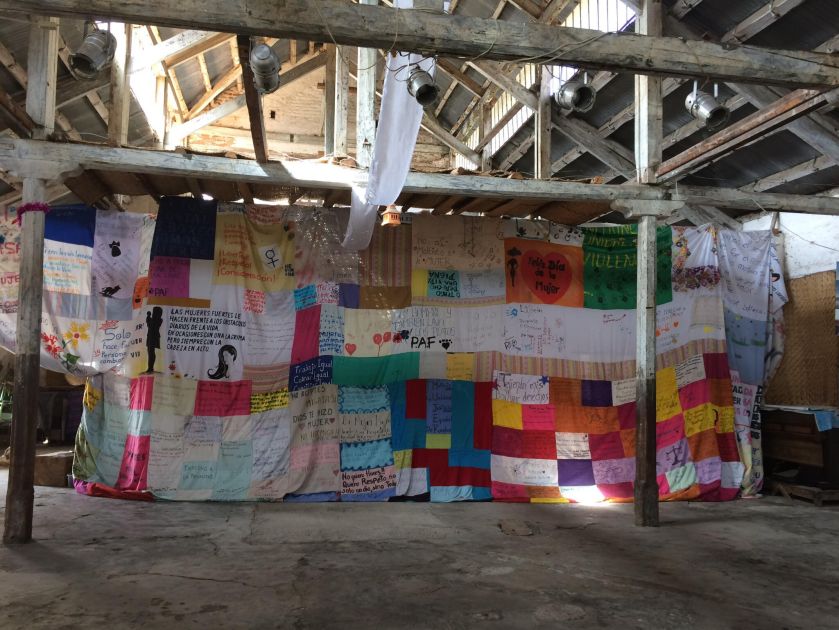
This patchwork quilt draped one entire wall of this huge warehouse-sized building, and represents the voices of the indigenous women in this community. This massive quilt was a powerful message because the indigenous women’s rights have been stifled in the past, but they are rising from years of oppression and abuses. One of the buildings at the the cultural center was historically used as a place for work, but now is used for hosting important cultural events and gatherings.


Perhaps the best part of the day, as a language learner, was participating in a few traditional Kichwa games. My friend Becky’s blog post highlights these games really well and even provides instructions of how to play them. in the same building where this quilt was hanging. She did such a good job describing those, I decided just to link hers! Again, I identified with my English Language Learners because I found the most meaning in participatory activities where we were learning by playing and doing and using our senses.
 Teaching the Andes